
Back Pain, Slipped Disc, and Nerve Problems: When Should You See a Neurosurgeon?
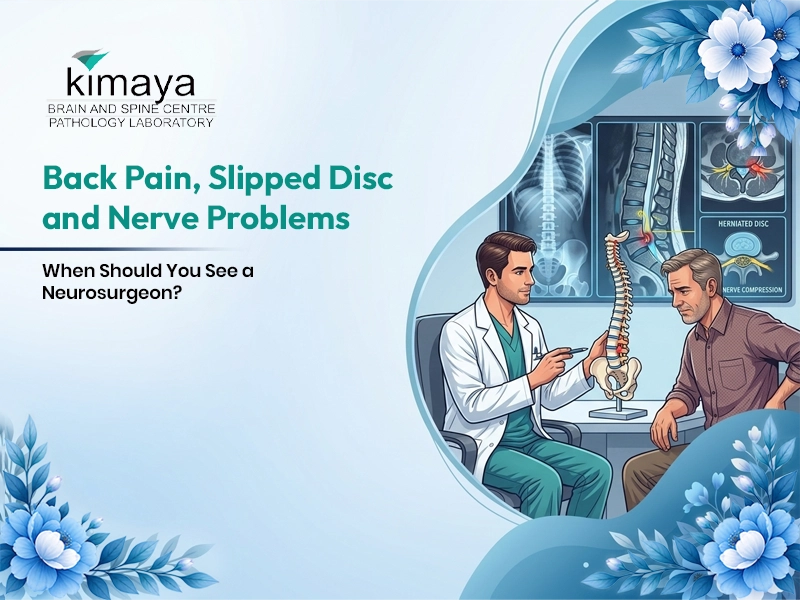
Back pain is one of the most common reasons people seek medical attention. In many cases, back pain improves with rest, appropriate activity, medicines, or physiotherapy. However, when back pain is accompanied by persistent nerve symptoms such as numbness, tingling, weakness, or pain travelling into an arm or leg, the underlying problem may involve the spine or nerves.
Conditions such as slipped discs, spinal stenosis, and nerve compression can sometimes require evaluation by a spine specialist or neurosurgeon.
For patients looking for neurosurgery in Pimpri-Chinchwad, understanding when back pain may require specialist assessment can help in choosing the appropriate next step.
Dr. Nihar S. Ingale, MBBS, DNB – Neurosurgery, is a senior consultant neurosurgeon providing brain and spine-focused care through Kimaya Brain & Spine Center in Kalewadi, Pimpri-Chinchwad.
Although neurosurgery is commonly associated with brain conditions, neurosurgeons also receive specialized training in conditions affecting the spine, spinal cord, and nerves. This connection between brain and spine expertise is particularly important when back or neck problems produce neurological symptoms.
Why Can Back Problems Cause Nerve Symptoms?
The spine protects the spinal cord and provides a pathway for nerves travelling to different parts of the body.
Between the bones of the spine are discs that help absorb movement and load. If a disc becomes damaged or protrudes, it can sometimes irritate or compress a nearby nerve.
Depending on the location of the problem, patients may experience:
- Back or neck pain
- Pain travelling into an arm or leg
- Tingling
- Numbness
- Muscle weakness
- Changes in sensation
- Difficulty walking in more significant cases
The presence of pain does not automatically mean that surgery is necessary. The important consideration is whether there is evidence of nerve or spinal cord involvement and whether symptoms are improving, stable or progressing.
What Is a Slipped Disc?
A “slipped disc” is a commonly used term for a herniated or prolapsed intervertebral disc.
The discs between the vertebrae contain a softer inner portion surrounded by a stronger outer layer. When part of a disc protrudes or herniates, it can sometimes place pressure on nearby nerves.
A disc problem in the lower back may cause pain travelling into the buttock or leg, commonly referred to as sciatica.
A disc problem in the neck may cause pain, tingling or numbness travelling into the shoulder, arm or hand.
Many disc-related conditions improve with conservative treatment. However, persistent or progressive neurological symptoms may require specialist assessment.
When Does Back Pain Need a Neurosurgical Evaluation?
Not every episode of back pain requires a neurosurgical consultation.
However, you should consider specialist evaluation when back pain is associated with symptoms suggesting nerve or spinal cord involvement.
These may include:
- Persistent numbness or tingling
- Muscle weakness
- Pain travelling into an arm or leg
- Difficulty walking
- Progressive loss of sensation
- Symptoms that are becoming progressively worse
- Persistent symptoms despite appropriate initial treatment
- A known disc prolapse or spinal abnormality
- Changes in bladder or bowel function
A neurosurgical assessment can help determine whether the symptoms are related to nerve compression or another spinal condition.
What Is Sciatica?
Sciatica refers to pain or other symptoms occurring along the path of the sciatic nerve, usually involving the lower back, buttock and leg.
It may be associated with:
- Shooting or burning pain
- Tingling
- Numbness
- Weakness
- Pain that worsens with certain movements
One common cause is compression of a nerve root due to a lumbar disc problem.
However, not every leg pain is sciatica. Other conditions can produce similar symptoms, which is why a proper clinical assessment is important when symptoms persist.
What About Neck Pain and Arm Numbness?
Spinal nerve problems are not limited to the lower back.
A condition affecting the cervical spine can cause neck pain and symptoms extending into the shoulder, arm or hand.
Patients may experience:
- Neck pain
- Shoulder pain
- Arm pain
- Tingling in the hand or fingers
- Numbness
- Weakness
If the spinal cord itself is affected, symptoms may become more significant and can include difficulty walking, balance problems or changes in hand coordination.
Progressive symptoms should be evaluated promptly.
Spinal Stenosis and Nerve Compression
Spinal stenosis occurs when the spaces available for the spinal cord or nerves become narrowed.
The condition can occur in different parts of the spine and may be related to age-related changes, disc problems, bone changes or other structural conditions.
Symptoms may include:
- Back pain
- Leg pain
- Numbness
- Tingling
- Weakness
- Difficulty walking for longer distances
Some patients may experience relief when sitting or bending forward.
Treatment depends on the severity of symptoms and the underlying cause. Non-surgical management may be appropriate in many cases, while surgery may be considered for selected patients with significant or progressive neurological problems.
When Is Back Pain an Emergency?
Certain symptoms require urgent medical attention.
One particularly important warning sign is a combination of back pain with new bladder or bowel dysfunction, numbness around the inner thighs or genital region, or significant weakness in the legs.
These symptoms can occur with serious compression of the nerves in the lower spine and require urgent medical assessment.
Other reasons to seek immediate medical care include:
- Sudden or rapidly worsening weakness
- Significant difficulty walking
- Loss of bladder or bowel control
- Severe neurological symptoms after an injury
- Back pain associated with serious systemic symptoms
Patients should not wait for a routine appointment if they develop severe or rapidly progressing neurological symptoms.
Does a Slipped Disc Always Require Surgery?
No.
This is one of the most important things patients should understand.
Many patients with disc problems can improve with non-surgical treatment. Depending on the diagnosis, treatment may include:
- Appropriate medication
- Physiotherapy
- Activity modification
- Rehabilitation
- Observation and follow-up
- Pain management
Surgery may be considered when symptoms are severe, persistent or associated with significant neurological problems, particularly when appropriate conservative treatment has not provided adequate improvement.
The decision should be individualized rather than based only on an MRI report.
Why Clinical Examination Matters
An MRI or CT scan can provide important information about the structure of the spine. However, an imaging finding does not always explain a patient’s symptoms.
Disc bulges and other age-related changes can sometimes be seen in people who have little or no pain.
This is why a specialist considers the patient’s symptoms, neurological examination, and imaging findings together.
A neurosurgeon may assess muscle strength, sensation, reflexes, coordination, walking pattern, and other neurological functions before deciding whether additional investigations or treatment are required.
Connecting Brain and Spine Expertise
The brain, spinal cord, and peripheral nerves form an interconnected nervous system.
A problem affecting the spine can therefore produce symptoms in areas far away from the actual source of the problem. For example, compression of a nerve in the lower spine may cause symptoms in the leg, while cervical nerve compression can produce symptoms in the arm or hand.
Neurosurgeons are trained to evaluate conditions involving both the brain and spine, including structural problems affecting the spinal cord and nerves.
This broader neurological perspective can be valuable when patients present with pain combined with neurological symptoms.
About Dr. Nihar S. Ingale
Dr. Nihar S. Ingale, MBBS, DNB – Neurosurgery, is a senior consultant neurosurgeon providing brain and spine-focused care in Pune and Pimpri-Chinchwad.
His professional training includes general surgery at Ruby Hall Clinic, Pune, followed by specialized neurosurgical training at CARE Hospitals, Hyderabad.
Through Kimaya Brain & Spine Center in Kalewadi, Dr. Nihar Ingale provides evaluation and management for brain, spine, spinal cord, and nerve-related conditions.
For patients with back or neck pain accompanied by neurological symptoms, specialist assessment can help determine whether the symptoms are related to nerve compression, disc disease, spinal stenosis, or another condition.
Treatment recommendations are based on the patient’s symptoms, examination, and investigation results.

Written By
Dr. Nihar ingale
MBBS, DNB – Neuro surgeon
Have Questions About Our Services?
From neurology and neurosurgery to physiotherapy, spine care, diagnostics, and rehabilitation, our team is here to help you find the right care for your needs.
Neurosurgery in Pimpri-Chinchwad for Brain and Spine Conditions
Back pain is common, but persistent pain combined with neurological symptoms deserves appropriate attention.
A slipped disc, nerve compression, or spinal condition does not automatically mean surgery is required. The first step is understanding the cause of the symptoms through appropriate clinical assessment.
For patients in Pimpri-Chinchwad and surrounding areas, specialist neurosurgical evaluation can help determine whether symptoms are related to the spine, spinal cord, or nerves and whether conservative treatment, further investigation, or surgery may be appropriate.
Dr. Nihar S. Ingale – MBBS, DNB, Neurosurgery,
Senior Consultant, Neurosurgeon | Brain & Spine Specialist,
Kimaya Brain & Spine Center,
Main Road, Opposite D-Mart, Shriram Colony, Kalewadi, Pimpri-Chinchwad, Maharashtra 411017
📞 Call Now: +91 90283 71417
Patients are advised to confirm consultation timings and availability before visiting.
Frequently Asked Questions
When should I see a neurosurgeon for back pain?
Consider a neurosurgical evaluation when back pain is persistent, associated with numbness or weakness, radiates into an arm or leg, causes difficulty walking, or does not improve with appropriate initial treatment.
Does every slipped disc require surgery?
No. Many slipped discs improve with non-surgical treatment. Surgery is considered only when medically appropriate, particularly in cases involving persistent severe symptoms or significant neurological problems.
Can a neurosurgeon treat sciatica?
Yes. Neurosurgeons can evaluate sciatica when it may be related to structural nerve compression, such as a lumbar disc problem.
Is an MRI always required for back pain?
No. Imaging decisions depend on the patient’s symptoms, clinical examination, and presence of concerning features. A specialist can determine whether MRI or another investigation is appropriate.
Can a neurosurgeon treat neck and spine problems?
Yes. Neurosurgeons are trained to evaluate conditions involving the brain, spinal cord, spine, and nerves, including selected cervical and lumbar spine conditions.