
Back Pain With Leg Pain or Numbness: Could It Be a Spine Problem?
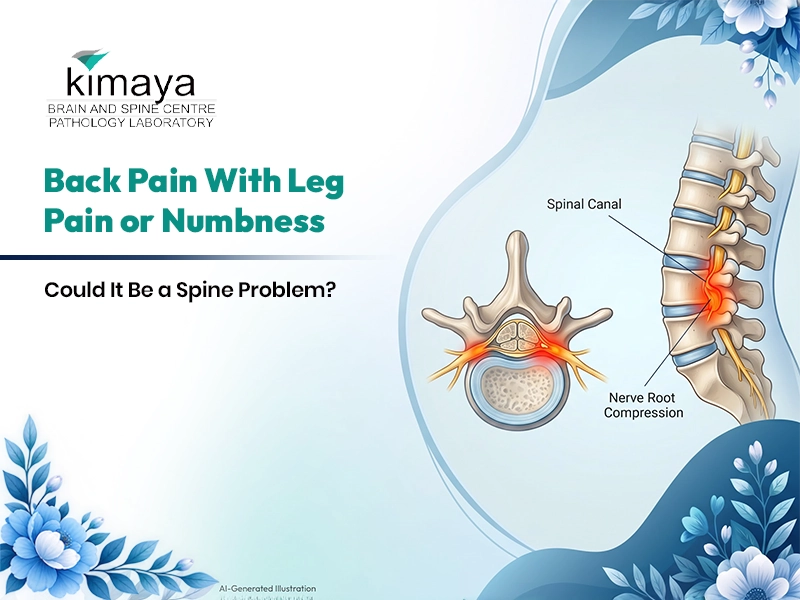
Back pain is a common health concern that can develop due to muscle strain, prolonged sitting, physical activity, poor posture or underlying spinal conditions. In many cases, symptoms improve with appropriate care and activity modification.
However, when back pain is accompanied by leg pain, tingling, numbness or muscle weakness, it may indicate irritation or compression of a nerve originating from the spine.
Conditions such as a herniated disc, lumbar spinal stenosis and degenerative spinal changes can contribute to these symptoms. Understanding the possible causes and recognising warning signs can help individuals seek appropriate medical evaluation.
What Does Back Pain With Leg Pain or Numbness Mean?
Pain that travels from the lower back into the buttock, thigh, calf or foot may sometimes indicate irritation of a spinal nerve root. This is commonly associated with a condition called lumbar radiculopathy.
Depending on the affected nerve, symptoms may include:
- Pain travelling from the lower back into one leg.
- Burning or shooting sensations.
- Tingling or pins-and-needles sensations.
- Reduced sensation in the leg or foot.
- Muscle weakness.
- Difficulty walking or performing everyday activities.
The pattern of pain and numbness can provide useful information about which nerves may be involved. However, not all leg pain or numbness originates from the spine.
Could It Be Sciatica?
Sciatica refers to pain that follows the distribution of the sciatic nerve, generally extending from the lower back through the buttock and into the leg.
It commonly occurs when one or more nerve roots in the lower spine become irritated or compressed.
A herniated lumbar disc is one possible cause. Other contributing conditions include spinal stenosis and degenerative changes.
Sciatica usually affects one side of the body, although symptoms can occasionally involve both legs.
It is important to distinguish sciatica from other conditions that may cause similar symptoms, including hip disorders, peripheral nerve problems and certain musculoskeletal conditions.
Common Spine Problems That Can Cause Leg Pain or Numbness
Several conditions affecting the lumbar spine may produce symptoms extending into the legs.
1. Herniated or Slipped Disc
Intervertebral discs act as cushions between the bones of the spine. When disc material protrudes beyond its normal boundary, it may irritate or compress a nearby nerve root.
Possible symptoms include lower back pain, shooting leg pain, tingling, numbness and weakness affecting the leg or foot.
2. Lumbar Spinal Stenosis
Lumbar spinal stenosis occurs when the spinal canal or openings through which spinal nerves pass become narrower.
This narrowing may cause back pain, leg discomfort, numbness or heaviness. Symptoms sometimes become more noticeable during standing and walking and improve when sitting or bending forward.
3. Degenerative Changes in the Spine
Age-related changes can affect spinal discs, joints and ligaments.
Disc degeneration, bone spur formation and thickening of spinal ligaments may reduce the space available for spinal nerves and contribute to nerve irritation.
4. Nerve Compression
Nerve compression can occur at different levels of the spine. Depending on the affected nerve root, symptoms may develop in particular areas of the thigh, calf or foot.
Muscle weakness, changes in sensation and reflex abnormalities may help identify the possible level of nerve involvement.
When Should You Seek Medical Evaluation?
Not every episode of back pain requires specialist assessment. However, evaluation is advisable when symptoms persist, become progressively worse or interfere with daily activities.
Medical assessment may be necessary when:
- Back pain repeatedly spreads into the leg.
- Numbness or tingling persists or increases.
- The leg or foot develops new weakness.
- Walking, sitting or sleeping becomes difficult because of pain.
- Symptoms repeatedly return despite initial management.
- Pain develops following an injury.
New or worsening muscle weakness deserves prompt medical attention because it may indicate significant neurological involvement.
When Is Back Pain With Leg Symptoms an Emergency?
Certain symptoms may indicate serious compression of nerves in the lower spinal canal, including cauda equina syndrome.
Seek emergency medical care if you experience:
- New difficulty controlling bladder or bowel movements.
- Difficulty starting urination or inability to pass urine.
- Numbness around the groin, genitals or inner thighs.
- Reduced sensation around the buttocks or anal region.
- Severe or rapidly worsening weakness in one or both legs.
- Significant neurological symptoms following a major accident.
These symptoms require immediate assessment in an emergency department. Do not wait for a routine appointment.
How Is a Spine Problem Diagnosed?
Diagnosis begins with understanding the symptoms and identifying their possible underlying cause.
A clinical evaluation may include:
Medical history: The doctor reviews the duration, location and severity of pain, associated symptoms and previous medical conditions.
Physical examination: Spinal movement, posture, walking ability and movements that reproduce symptoms may be assessed.
Neurological examination: Muscle strength, reflexes and sensation are checked to identify possible nerve involvement.
MRI scan: When clinically indicated, MRI can help assess spinal discs, nerve roots and surrounding soft tissues.
Other investigations: X-rays, CT scans or nerve conduction studies may be considered in selected cases.
Not everyone with back pain and leg symptoms requires an MRI. Imaging decisions depend on clinical findings and whether the results are likely to influence treatment.
Back Pain and Leg Pain Treatment: What Are the Options?
Treatment depends on the underlying diagnosis, symptom severity and neurological findings.
1. Activity Modification
Avoiding movements that aggravate symptoms may help during recovery. Gentle movement and maintaining appropriate activity levels are generally encouraged rather than prolonged bed rest.
2. Medication
Medication may be considered depending on the cause of pain, medical history and individual risk factors. The choice of medicine should be guided by a qualified healthcare professional.
3. Physiotherapy and Exercises
An individualised physiotherapy programme may include mobility exercises, strengthening activities and guidance on posture and everyday movements.
Exercises should be selected according to the underlying condition and the patient’s physical capabilities.
4. Further Specialist Management
In selected cases, additional interventions may be considered depending on the cause of nerve compression and the severity of symptoms.
Surgical evaluation may be appropriate when there is significant nerve compression, progressive neurological weakness or persistent disabling symptoms despite appropriate non-surgical treatment.
Procedures such as lumbar discectomy or spinal decompression may be considered in suitable cases.
Not every patient with back pain and leg symptoms requires surgery. Treatment decisions should be based on clinical examination and relevant investigation findings.
Conclusion
Back pain accompanied by leg pain, tingling, numbness, or weakness may sometimes indicate an underlying spinal nerve problem. Conditions such as herniated discs, lumbar spinal stenosis, and degenerative spinal changes can contribute to these symptoms.
Recognizing persistent or progressive neurological symptoms is important for timely medical evaluation. The appropriate treatment depends on identifying the underlying cause, and many individuals can be managed without surgery.
External medical references

MMC REGISTRATION NUMBER
2005/01/0366
Medical content reviewer: Dr. Nihar S. Ingale, MBBS, DNB – Neurosurgery
Have Questions About Our Services?
Medical Disclaimer
The information provided in this article is intended for general educational purposes only. It should not be considered a substitute for professional medical advice, diagnosis, or treatment. Individual medical conditions and treatment requirements vary. Please consult a qualified medical professional for an appropriate clinical evaluation.
Back Pain With Leg Pain or Numbness? Get a Spine Evaluation
Persistent back pain with leg pain, tingling, or numbness may sometimes be related to a spinal nerve problem. If you are looking for a spine specialist in Kalewadi, Pimpri Chinchwad, Dr. Nihar Ingale – Brain & Spine Specialist can provide professional neurological and spine evaluation.
Book a consultation to understand the possible cause of your back and leg symptoms.
Dr. Nihar S. Ingale – MBBS, DNB, Neurosurgery,
Senior Consultant, Neurosurgeon | Brain & Spine Specialist,
Kimaya Brain & Spine Center,
Main Road, Opposite D-Mart, Shriram Colony, Kalewadi, Pimpri-Chinchwad, Maharashtra 411017
📞 Call Now: +91 90283 71417
Book a consultation with Dr. Nihar Ingale to discuss persistent or recurring headaches and determine the appropriate next step for your care.
Frequently Asked Questions
Does back pain with leg pain always indicate a slipped disc?
No. Although a herniated disc is one possible cause, symptoms may also occur due to spinal stenosis, degenerative changes, nerve disorders or musculoskeletal conditions.
Why does back pain sometimes travel down the leg?
Pain may travel into the leg when a nerve root originating from the lumbar spine becomes irritated or compressed. This may produce symptoms associated with lumbar radiculopathy or sciatica.
Can nerve compression cause permanent weakness?
Severe or prolonged nerve compression can sometimes result in lasting neurological problems. New or progressive weakness requires prompt medical assessment to determine its cause and appropriate management.
Does everyone with back pain and numbness need an MRI?
No. MRI is recommended when clinically appropriate, particularly when symptoms persist, neurological abnormalities are present or imaging may influence treatment decisions.
Can back pain with leg symptoms improve without surgery?
Yes. Many individuals can be managed with non-surgical approaches, depending on the underlying condition and severity of symptoms. Surgery is considered in selected cases.