
Sciatica Pain: Understanding Its Causes, Symptoms, Diagnosis, and Treatment Options
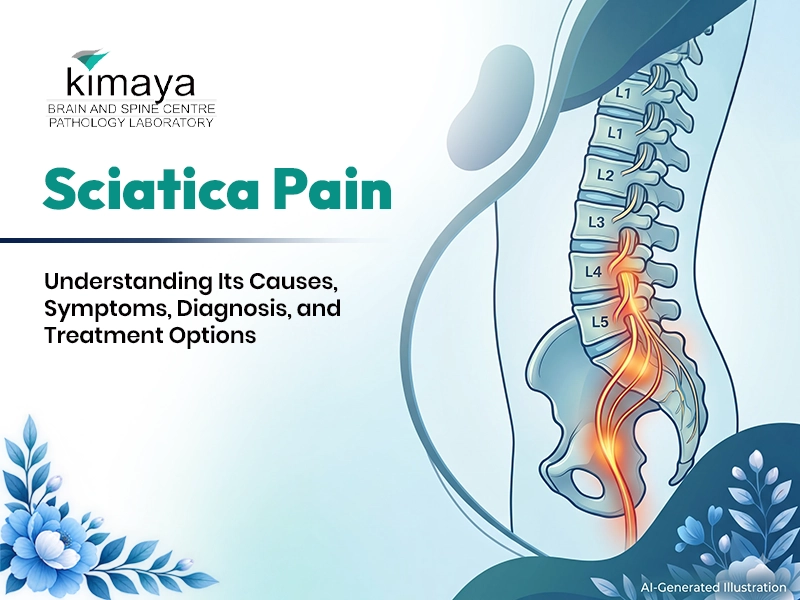
Sciatica is a condition characterised by pain that travels from the lower back or buttock into one or both legs. The discomfort may feel sharp, burning, shooting or like an electric shock. Some individuals may also experience tingling, numbness or muscle weakness affecting the leg or foot.
Sciatica commonly develops when a nerve root in the lower spine becomes irritated or compressed. A herniated disc, spinal stenosis and age-related spinal changes are among its possible causes.
Although many individuals improve with non-surgical management, persistent pain or neurological symptoms may require medical evaluation. Understanding the causes and available treatment approaches can help individuals make informed decisions about their spinal health.
What Is Sciatica?
The sciatic nerve is the largest nerve in the human body. It originates from nerve roots in the lower lumbar and sacral spine, passes through the buttock and extends down each leg.
Sciatica refers to pain following the distribution of this nerve, usually because of irritation or compression of one or more spinal nerve roots.
The condition generally affects one side of the body. Pain may extend from the lower back towards the buttock, thigh, calf or foot.
Sciatica is a symptom rather than a disease itself. Identifying the underlying cause is important for determining an appropriate treatment approach.
What Causes Sciatica Pain?
Several conditions involving the lumbar spine can contribute to sciatic symptoms.
1. Herniated or Slipped Disc
A herniated disc occurs when disc material extends beyond its normal boundary. If it irritates or compresses a nearby nerve root, it may cause lower back pain and radiating leg discomfort.
This is one of the common causes of sciatica.
2. Lumbar Spinal Stenosis
Spinal stenosis refers to narrowing of the spinal canal or nerve passageways. This narrowing can place pressure on spinal nerves, potentially causing pain, numbness or weakness.
Symptoms may become more noticeable during prolonged standing or walking.
3. Degenerative Changes in the Spine
Age-related changes can affect spinal discs, joints and ligaments. Disc degeneration and bone spur formation may reduce the space available for nerve roots and contribute to nerve irritation.
4. Spondylolisthesis
Spondylolisthesis occurs when one vertebra moves forward relative to the vertebra below it. In some individuals, this may narrow the nerve passageways and produce symptoms resembling sciatica.
5. Physical Injury
Certain back injuries, repetitive movements and sudden twisting motions may contribute to spinal problems associated with nerve irritation. However, sciatica can also develop without a clearly identifiable injury.
What Are the Common Symptoms of Sciatica?
Sciatica symptoms vary according to the affected nerve root and severity of nerve irritation.
Common symptoms include:
- Pain travelling from the lower back or buttock into the leg.
- Sharp, shooting or burning sensations.
- Tingling or pins-and-needles sensations.
- Numbness in the thigh, calf or foot.
- Muscle weakness affecting the leg or foot.
- Discomfort that increases during prolonged sitting.
- Pain that becomes more noticeable during coughing or sneezing.
Not everyone experiences all these symptoms. The location and pattern of pain, together with neurological examination findings, help determine whether spinal nerve involvement may be responsible.
New or progressive muscle weakness requires prompt medical assessment.
How Is Sciatica Diagnosed?
Diagnosis involves reviewing symptoms, examining neurological function and identifying possible causes.
A doctor may recommend the following assessments:
Medical history: Information about pain duration, location, previous injuries and associated symptoms helps guide the evaluation.
Physical examination: Posture, spinal movement, walking ability and specific movements may be assessed.
Neurological examination: Muscle strength, reflexes and sensation are evaluated to identify possible nerve involvement.
MRI scan: When clinically indicated, MRI can provide detailed information about spinal discs, nerve roots and surrounding structures.
Other investigations: X-rays, CT scans or nerve conduction studies may be considered in selected cases.
Not every patient with sciatica requires imaging. Investigations depend on symptoms, examination findings and whether the results are likely to influence treatment decisions.
What Are the Available Treatment Options for Sciatica?
Sciatica treatment depends on the underlying cause, severity of symptoms, duration of the condition and presence of neurological deficits.
Many individuals can be managed without surgery.
1. Activity Modification
Temporarily modifying activities that aggravate pain may help manage symptoms. Gentle movement and a gradual return to routine activities are generally encouraged when medically appropriate.
Prolonged bed rest is usually discouraged.
2. Medication
A doctor may recommend suitable medication depending on symptoms, medical history and other health considerations.
The benefits and potential risks of medicines should be discussed with a qualified healthcare professional.
3. Physiotherapy
Physiotherapy may help improve mobility, flexibility and muscle function.
An individualised exercise programme may include spinal mobility exercises, strengthening activities and guidance on posture and everyday movements.
4. Targeted Injections
In selected cases, an injection around an affected nerve may be considered when symptoms remain significant despite other management approaches.
The potential benefits and risks should be discussed before proceeding.
5. Spine Surgery
Surgery is not necessary for most cases of sciatica.
However, surgical evaluation may be appropriate when significant nerve compression causes corresponding neurological symptoms, when weakness progresses, or when disabling symptoms persist despite appropriate non-surgical management.
Depending on the underlying condition, procedures such as lumbar discectomy or spinal decompression may be considered.
The decision to operate depends on clinical examination, imaging findings and the patient’s overall medical condition.
When Should You Consult a Spine Specialist?
Medical evaluation may be necessary when:
- Leg pain persists or repeatedly returns.
- Numbness or tingling progressively increases.
- Walking or routine activities become difficult.
- Pain does not improve with initial management.
- New muscle weakness develops.
Certain symptoms require emergency medical attention. These include new bladder or bowel dysfunction, inability to pass urine, numbness around the groin or buttocks, and severe or rapidly worsening weakness in one or both legs.
These symptoms may indicate cauda equina syndrome or another serious neurological condition. Immediate emergency assessment is important.
Conclusion
Sciatica can affect mobility, comfort and everyday activities. Understanding its possible causes, symptoms and treatment options is important for appropriate management.
Many cases can be managed without surgery, while selected conditions may require further neurological or neurosurgical evaluation. Treatment decisions should always be based on individual clinical findings.
Medical assessment is particularly important when symptoms persist, worsen or involve changes in muscle strength or sensation.

MMC REGISTRATION NUMBER
2005/01/0366
Medical content reviewer: Dr. Nihar S. Ingale, MBBS, DNB – Neurosurgery
Have Questions About Our Services?
Medical Disclaimer
The information provided in this article is intended for general educational purposes only. It should not be considered a substitute for professional medical advice, diagnosis or treatment. Individual medical conditions and treatment requirements vary. Please consult a qualified medical professional for an appropriate clinical evaluation.
Dr. Nihar S. Ingale – MBBS, DNB, Neurosurgery,
Senior Consultant, Neurosurgeon | Brain & Spine Specialist,
Kimaya Brain & Spine Center,
Main Road, Opposite D-Mart, Shriram Colony, Kalewadi, Pimpri-Chinchwad, Maharashtra 411017
📞 Call Now: +91 90283 71417
Book a consultation with Dr. Nihar Ingale to discuss persistent or recurring headaches and determine the appropriate next step for your care.
Frequently Asked Questions
Can sciatica improve without surgery?
Yes. Many cases improve with appropriate non-surgical management, depending on the underlying cause and severity of symptoms.
Does every patient with sciatica need an MRI?
No. MRI is recommended when clinically indicated, particularly when symptoms persist, significant neurological findings are present or imaging may influence treatment.
Can a slipped disc cause sciatica?
Yes. A herniated lumbar disc can irritate or compress a nearby nerve root, causing pain, tingling or numbness that travels into the leg.
How long does sciatica last?
Recovery varies. Many acute episodes improve over several weeks, although some individuals may experience longer-lasting or recurring symptoms.
When is surgery considered for sciatica?
Surgery may be considered in selected cases involving significant nerve compression, progressive neurological weakness, emergency indications or persistent disabling symptoms despite appropriate non-surgical treatment.