
Sciatica Pain: Causes, Symptoms and When to Consult a Spine Specialist
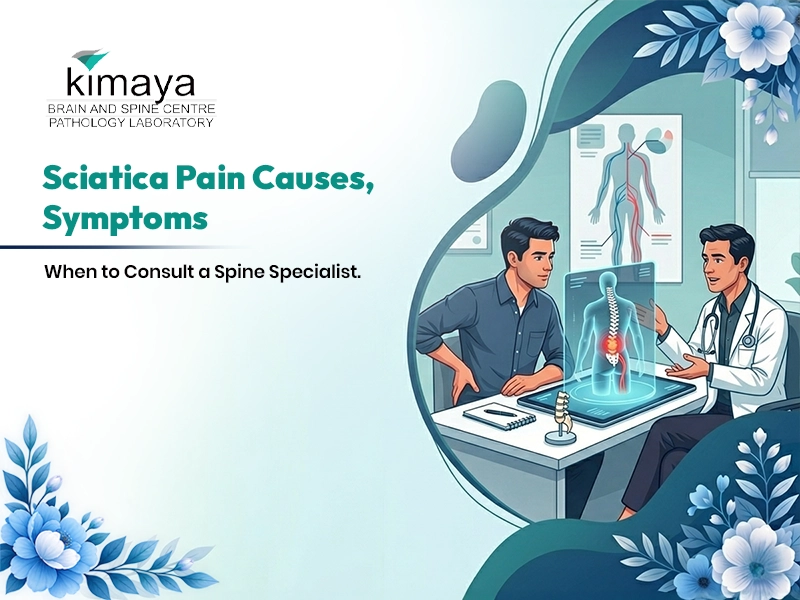
Sciatica pain can make everyday activities such as walking, sitting, standing, and sleeping uncomfortable. It often begins in the lower back or buttock and travels down one leg. Some people experience sharp, shooting pain, while others notice tingling, numbness, burning sensations, or weakness in the leg or foot.
Sciatica usually occurs when a nerve root in the lower spine becomes irritated or compressed. Although many cases improve with appropriate treatment, persistent or worsening symptoms should not be ignored.
Understanding the causes and symptoms of sciatica can help you recognise when medical evaluation may be necessary. If you are looking for sciatica treatment or a spine specialist in Kalewadi, Pimpri-Chinchwad, a professional assessment can help identify the possible cause of your symptoms and determine the appropriate treatment approach.
At Dr. Nihar Ingale – Brain & Spine Specialist, patients experiencing lower back pain, radiating leg pain, numbness, and other spine-related symptoms can seek evaluation to understand their condition and available treatment options.
What Is Sciatica?
Sciatica refers to pain that travels along the pathway of the sciatic nerve, which extends from the lower back through the buttocks and down the legs.
The condition generally develops when one or more nerve roots in the lumbar spine become irritated or compressed. This may cause pain that travels from the lower back into the buttock, thigh, calf, or foot.
Sciatica usually affects one side of the body, although symptoms can occasionally occur on both sides.
It is important to understand that sciatica is a symptom of an underlying problem rather than a disease on its own. Identifying the cause is an important step towards effective sciatica treatment.
What Causes Sciatica Pain?
Several conditions can irritate or compress the nerves responsible for sciatic pain.
1. Herniated or Slipped Disc
A herniated disc is one of the common causes of sciatica. The discs between the bones of the spine act as cushions. When part of a disc protrudes and presses against a nearby nerve root, it may cause lower back pain that radiates into the leg.
2. Lumbar Spinal Stenosis
Spinal stenosis occurs when the spaces within the spinal canal become narrower. This narrowing can put pressure on the spinal nerves and cause pain, numbness, or weakness, particularly during standing or walking.
3. Degenerative Changes in the Spine
Age-related changes, including disc degeneration and bone spurs, can reduce the space available for nerves and contribute to nerve compression.
4. Spondylolisthesis
Spondylolisthesis occurs when one vertebra slips forward relative to the vertebra below it. In some cases, this can narrow the nerve pathways and cause symptoms similar to sciatica.
5. Back Injury or Physical Strain
Certain injuries, heavy lifting, repetitive twisting, or sudden movements can contribute to spinal problems that irritate nerve roots. However, sciatica can also develop without a clearly identifiable injury.
The exact cause varies from person to person. A clinical examination can help determine whether the symptoms are related to a spinal nerve problem or another condition.
What Are the Common Symptoms of Sciatica?
Sciatica symptoms may range from mild discomfort to severe pain that affects mobility and daily activities.
Common symptoms include:
- Pain travelling from the lower back or buttock down one leg.
- Sharp, shooting, burning, or electric-shock-like pain.
- Tingling or pins-and-needles sensations in the leg or foot.
- Numbness in certain areas of the leg.
- Muscle weakness in the affected leg or foot.
- Pain that becomes worse after prolonged sitting or certain movements.
- Discomfort that increases during coughing or sneezing.
Not everyone experiences all these symptoms. The location, severity, and duration of the pain can help a doctor determine whether a spinal nerve problem may be responsible.
If leg pain is accompanied by new or worsening weakness, prompt medical assessment is important.
When Should You Consult a Spine Specialist?
Occasional mild back discomfort may improve with appropriate self-care. However, consulting a spine specialist is advisable when pain persists, worsens, or interferes with everyday activities.
You should consider a specialist consultation in the following situations.
1. Persistent or Recurring Leg Pain
If pain repeatedly travels from your lower back or buttock into your leg, it may indicate irritation of a spinal nerve. A spine specialist can assess the symptoms and help identify the possible cause.
2. Numbness or Tingling in the Leg
Numbness, tingling, or pins-and-needles sensations may occur when a nerve is irritated or compressed. Persistent or progressive changes in sensation should be evaluated.
3. Difficulty Walking or Sitting
Sciatica can make it difficult to sit for extended periods, walk comfortably, or perform routine activities. If pain regularly affects your mobility, professional evaluation can help determine appropriate treatment options.
4. Pain That Does Not Improve
If symptoms persist despite initial treatment or repeatedly return, a doctor may recommend further assessment to identify the underlying spinal condition.
5. Muscle Weakness
Weakness affecting the leg or foot may indicate more significant nerve involvement. New or worsening weakness requires prompt medical assessment rather than continued self-treatment.
When Is Sciatica a Medical Emergency?
Seek emergency medical care if you experience:
- New difficulty controlling your bladder or bowel movements.
- Difficulty passing urine or an inability to urinate.
- Numbness around the groin, genitals, or buttocks.
- Severe or rapidly worsening weakness in one or both legs.
- Severe symptoms following a major accident or injury.
These symptoms can indicate serious nerve compression or another urgent medical condition. Do not wait for a routine consultation.
How Is Sciatica Diagnosed?
Diagnosing sciatica involves understanding the patient’s symptoms and identifying the possible source of nerve irritation.
A spine specialist may begin by reviewing your medical history and asking about the location, duration, and severity of your pain.
The evaluation may include:
Physical examination: The doctor assesses movement, posture, and the pattern of pain.
Neurological examination: Muscle strength, reflexes, sensation, and walking ability may be checked to identify signs of nerve involvement.
MRI scan: When clinically indicated, an MRI can help evaluate spinal discs, nerve roots, and surrounding soft tissues.
Other investigations: X-rays, CT scans, or nerve tests may be considered in selected cases.
Not every patient with sciatica requires an MRI or other imaging. Investigations depend on the symptoms, examination findings, duration of the problem, and whether a serious underlying condition is suspected.
Sciatica Treatment: What Are the Available Options?
The most appropriate sciatica treatment depends on the underlying cause, severity of symptoms, and presence of neurological deficits.
1. Activity Modification
Avoiding activities that aggravate pain may help during recovery. However, prolonged bed rest is generally discouraged. Gentle movement and a gradual return to normal activities may be beneficial when medically appropriate.
2. Medication
A doctor may recommend suitable medication depending on the patient’s symptoms, medical history, and other health considerations. Medicines should be taken only as advised by a qualified healthcare professional.
3. Physiotherapy and Exercises
A physiotherapist may recommend exercises designed to improve mobility, flexibility, posture, and core strength. The exercise plan should be tailored to the patient’s condition because some movements may aggravate particular spinal problems.
4. Targeted Injections
In selected cases, an injection around an affected nerve may be considered when pain remains significant despite other treatments. The potential benefits and risks should be discussed with the treating specialist.
5. Spine Surgery
Surgery is not necessary for most cases of sciatica. However, a spine specialist or neurosurgeon may consider surgery when there is significant nerve compression, progressive neurological weakness, an emergency indication, or persistent disabling symptoms despite appropriate non-surgical treatment.
The goal of sciatica treatment is to address the underlying cause, relieve symptoms, and help the patient return to normal activities as safely as possible.
Why Consult Dr. Nihar Ingale for Spine Evaluation?
Dr. Nihar Ingale – Brain & Spine Specialist provides neurological and neurosurgical evaluation for patients experiencing symptoms involving the brain, spine, spinal cord, and nerves.
For patients with suspected sciatica, a consultation can help assess whether symptoms may be related to a herniated disc, nerve compression, spinal stenosis, or another condition.
Patients looking for a sciatica specialist or spine specialist in Kalewadi, Pimpri-Chinchwad, can discuss their symptoms and understand whether further investigations, non-surgical treatment, or neurosurgical assessment may be appropriate.
The treatment plan should be based on the patient’s individual diagnosis, examination findings, and clinical needs. Many cases of sciatica can be managed without surgery, while selected cases may require more specialised intervention.
Looking for Sciatica Treatment in Kalewadi, Pimpri-Chinchwad?
Sciatica can interfere with walking, working, sleeping, and other everyday activities. Although many cases improve with appropriate care, persistent pain, numbness, or weakness should not be ignored.
Understanding whether symptoms originate from a spinal nerve or another condition is an important step towards appropriate treatment.
If you are experiencing recurring lower back pain that travels into the leg, tingling, numbness, or other symptoms suggestive of sciatica, consider consulting Dr. Nihar Ingale – Brain & Spine Specialist for professional evaluation.

Written By
Dr. Nihar ingale
MBBS, DNB – Neuro surgeon
Have Questions About Our Services?
From neurology and neurosurgery to physiotherapy, spine care, diagnostics, and rehabilitation, our team is here to help you find the right care for your needs.
Dr. Nihar S. Ingale – MBBS, DNB, Neurosurgery,
Senior Consultant, Neurosurgeon | Brain & Spine Specialist,
Kimaya Brain & Spine Center,
Main Road, Opposite D-Mart, Shriram Colony, Kalewadi, Pimpri-Chinchwad, Maharashtra 411017
📞 Call Now: +91 90283 71417
Book a consultation with Dr. Nihar Ingale to discuss persistent or recurring headaches and determine the appropriate next step for your care.
Frequently Asked Questions
What is the most common cause of sciatica?
A herniated or slipped disc pressing on a nerve root in the lower spine is a common cause of sciatica. Spinal stenosis and other degenerative changes can also contribute.
Which doctor should I consult for sciatica pain?
A doctor experienced in evaluating spinal and nerve conditions can assess the cause of sciatica. Depending on your symptoms, you may be referred to a spine specialist, neurosurgeon, orthopaedic spine specialist, or another appropriate healthcare professional.
When should I see a spine specialist for sciatica?
Consider consulting a spine specialist if the pain persists, worsens, interferes with daily activities, or is accompanied by numbness or weakness. New or progressive weakness requires prompt assessment. Bladder or bowel dysfunction or numbness around the groin requires emergency care.
Does sciatica always require surgery?
No. Many patients improve with non-surgical treatment, including appropriate activity, medication, and physiotherapy. Surgery may be considered for selected cases involving significant nerve compression, progressive weakness, or persistent disabling symptoms.
Can sciatica cause permanent nerve damage?
Severe or prolonged nerve compression can sometimes cause lasting weakness or sensory changes. Early assessment is important when symptoms are severe, progressive, or associated with neurological deficits.
Is an MRI necessary for sciatica?
Not always. An MRI may be recommended when symptoms are severe or persistent, neurological deficits are present, or imaging is likely to influence treatment decisions.